Blog
The baby’s birth experience – an osteopathic perspective
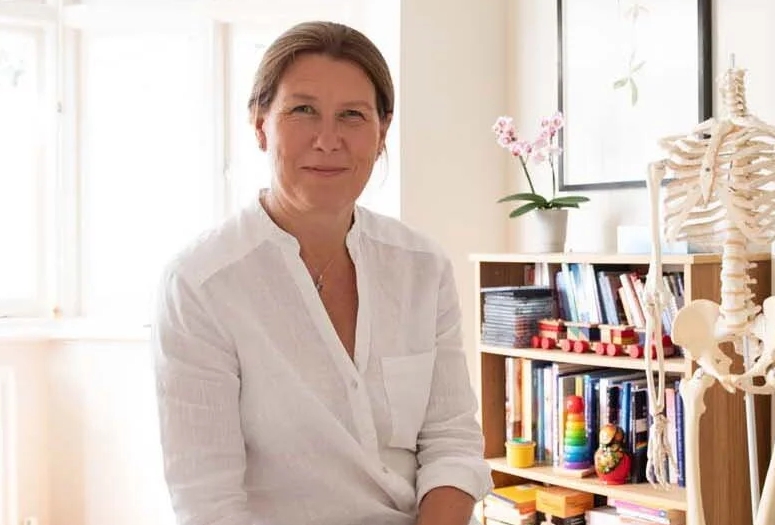
Julia Finlay is a south London osteopath who specialises in paediatric and cranial osteopathy. She runs her own clinic and is also consultant in charge at the Osteopathic Centre for Children's Friday clinic. Call 07779017965
Treating babies over the 19 years since I qualified I’ve heard many, many birth stories, and met many mother and baby pairs struggling with post birth adaptation, including feeding and settling.
When we take an osteopathic case history, we are listening for lots of clues about why the presenting problem has arisen and what might be maintaining it. In particular, when I listen to a birth history, I’m thinking – so what was the baby’s experience in all of this?
And how might that be impacting the reason they have been brought in for treatment? Sometimes it may be clear; other times less so. There can be an ostensibly straightforward delivery with a very unhappy baby; other times the baby seems to be doing amazingly well given a long and complex delivery. It can be quite a mystery. In particular - being born by elective Caesarean section may seem to be the easiest possible delivery, and of course there are compelling clinical reasons for it, but some of
these babies are particularly unsettled and proportionally more of them need feeding support. Why might that be?
The answer might be something to do with the speed at which it all happens. In a vaginal birth, the baby is “primed” for the forthcoming transition by the uterine contractions and squeezing through the birth canal, which seems to help them make the transition. The squeezing also helps the lungs spring open as the baby takes its first gasps of air.
Contrast this with a caesarean – the baby might have been asleep and suddenly they are pulled into a brightly lit and noisy environment. They have less squeezing and less preparation for what’s about to happen. Some of them remain very unsettled for a while afterwards as their immature systems cannot regulate well in the early days. They may be “Velcro” babies and difficult to put down, and the tensions they retain affect feeding
mechanics and digestion.
All this also points to what is known as low vagal tone, when the vagus nerve, our body’s key regulating neural circuitry, is not firing efficiently to help soothe and balance the system as a whole. (1)
Many babies with feeding and settling issues are showing us that they are struggling with synchronisation of their bodily rhythms – suck, swallow, breathe, rest and digest. The osteopathic approach is to listen to their systems in such a way that they can settle and recalibrate to a steadier rhythm that helps their anatomy and physiology function more efficiently. A first visit might be entirely about this “re-setting” so that the foundations are there for healthy and rhythmic bodily function. The body’s amazing innate intelligence knows what to do if the foundations are in place.
Of course there may be more specific anatomical restrictions that need attention and we work gently to help these resolve too. It need not take long to turn things around and get the situation much more settled and enjoyable for mother and baby. It’s lovely work to do and I’m always pleased to see another mother and baby pair off to a good start in
this amazing new phase of family life.
1, Cerritelli F, Frasch M, Antonelli MC, Viglione C, Vecchi S, Chiera M, Manzotti A (2021) A review on the Vagus Nerve and Autonomic Nervous System Development: Searching for Critical Windows. Frontiers in
Neuroscience Sept 2021, 15, art721605
doi:10.3389/fnins.2021.721605

© South London Independent Midwives
Midwife Crystal Palace, Dulwich, Brockley, Midwife Streatham, Forest Hill, Sydenham, Peckham, Midwife Brixton, Beckenham, Croydon.